Visit our showroom — San Jose's finest stone destination✦Over 500 premium slabs in stock, ready to view✦Marble · Granite · Quartz · Limestone · Onyx✦Complimentary design consultation — book yours today✦Now accepting trade & contractor applications✦Sourced from the world's finest quarries — Italy, Brazil, Turkey✦
Baystone
Call us(408) 441-1114Book Appointment
Call UsBook Visit
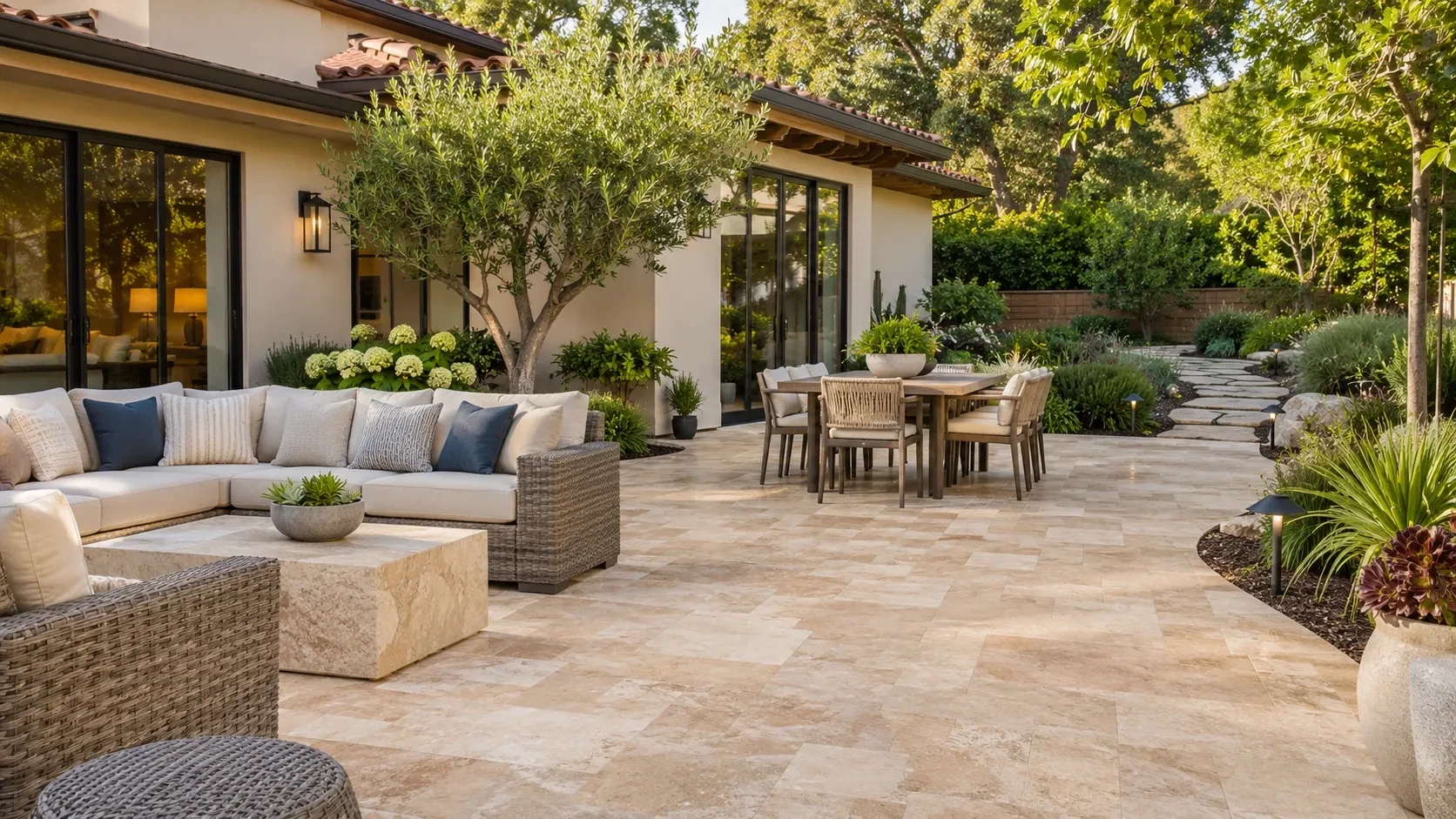
Bay Area outdoor living space with a warm beige travertine patio, outdoor dining area, and landscaped stone pathway.
Design & Inspiration
All Insights
Insights/Design & Inspiration/Outdoor Living with Natural Stone: A Bay Area Homeowner's Guide
November 2, 2026·8 min read
Natural stone can transform an outdoor area into a comfortable, attractive extension of your home. Materials such as travertine, granite, limestone, slate, and flagstone offer distinct colors, textures, and performance characteristics. Choosing the right stone depends on where you plan to use it, how much exposure it will receive, and how you intend to maintain it.
For Bay Area homeowners, outdoor design also needs to account for changing temperatures, coastal conditions, sunlight, and occasional heavy rain.
This guide explains which natural stones work for common outdoor applications, how to select suitable finishes, and what to consider before installation.
Why Natural Stone Works for Bay Area Outdoor Spaces
Natural stone brings texture and visual character to patios, pool areas, walkways, and outdoor kitchens. Each piece has unique mineral patterns and color variations, creating a distinctive appearance.
It also offers several practical advantages when selected and installed correctly.
Distinctive appearance: Natural veining, mineral patterns, and textures give outdoor spaces an individual look.
Design flexibility: Different stones complement contemporary, traditional, rustic, and Mediterranean-inspired homes.
Versatile applications: Stone works for patios, steps, pool surrounds, outdoor countertops, and garden paths.
Long-term potential: Suitable materials, proper installation, and regular maintenance help outdoor surfaces last.
Bay Area properties experience different weather conditions. A stone suitable for a covered patio may not be the best choice for an exposed pool deck. Consider your property's conditions before choosing a material.
Best Natural Stone Materials for Outdoor Living
Different stones offer different levels of hardness, porosity, texture, and weather resistance. Understanding these differences helps you choose a material that suits its intended application.
Travertine for Patios and Pool Decks
Travertine is a popular option for outdoor patios and pool surroundings. Its natural appearance and warm beige, cream, and light brown tones create a relaxed atmosphere.
Travertine is also available in textured finishes that can provide useful traction around wet areas. However, not every travertine product has the same surface characteristics. The finish, porosity, and installation method affect its suitability.
For pool decks, consider a finish designed for outdoor use and evaluate its slip resistance when wet. Ask about sealing requirements and how the stone may respond to pool chemicals and cleaning products.
Granite for Outdoor Countertops and High-Traffic Areas
Granite is a dense natural stone commonly used for countertops and other surfaces that experience frequent use. Its hardness makes it a practical option for outdoor kitchens, provided the selected slab and installation are appropriate for exterior conditions.
Granite comes in many colors and patterns, from subtle gray and white combinations to darker surfaces with prominent mineral details.
For outdoor countertops, consider exposure to direct sunlight, rain, food spills, and temperature changes. Some granite varieties are more porous than others, so sealing may be recommended. Confirm the maintenance requirements of the specific stone before installation.
Bluestone and Flagstone for Walkways and Patios
Bluestone and flagstone are attractive options for outdoor flooring and landscaping. Bluestone often features blue-gray or charcoal tones, while flagstone describes flat pieces of stone that can come in several natural colors and textures.
Their irregular shapes can create a relaxed, organic appearance in garden paths and patio areas. Cut pieces can also provide a more structured layout.
When selecting these materials, pay attention to thickness, surface texture, and installation. Uneven pieces can create trip hazards if they are not properly set. Choose a layout that provides stable footing and appropriate drainage.
Limestone and Slate for Outdoor Design Features
Limestone offers softer colors and natural textures that work well with understated outdoor designs. It can complement garden walls, patios, steps, and selected decorative features.
However, limestone composition and density vary. Some varieties are more vulnerable to staining, moisture absorption, and acidic substances. Choose a grade and finish suitable for the intended exposure.
Slate provides a more textured appearance, often with layered patterns and darker colors. It can work well for pathways, selected patio surfaces, and decorative landscaping.
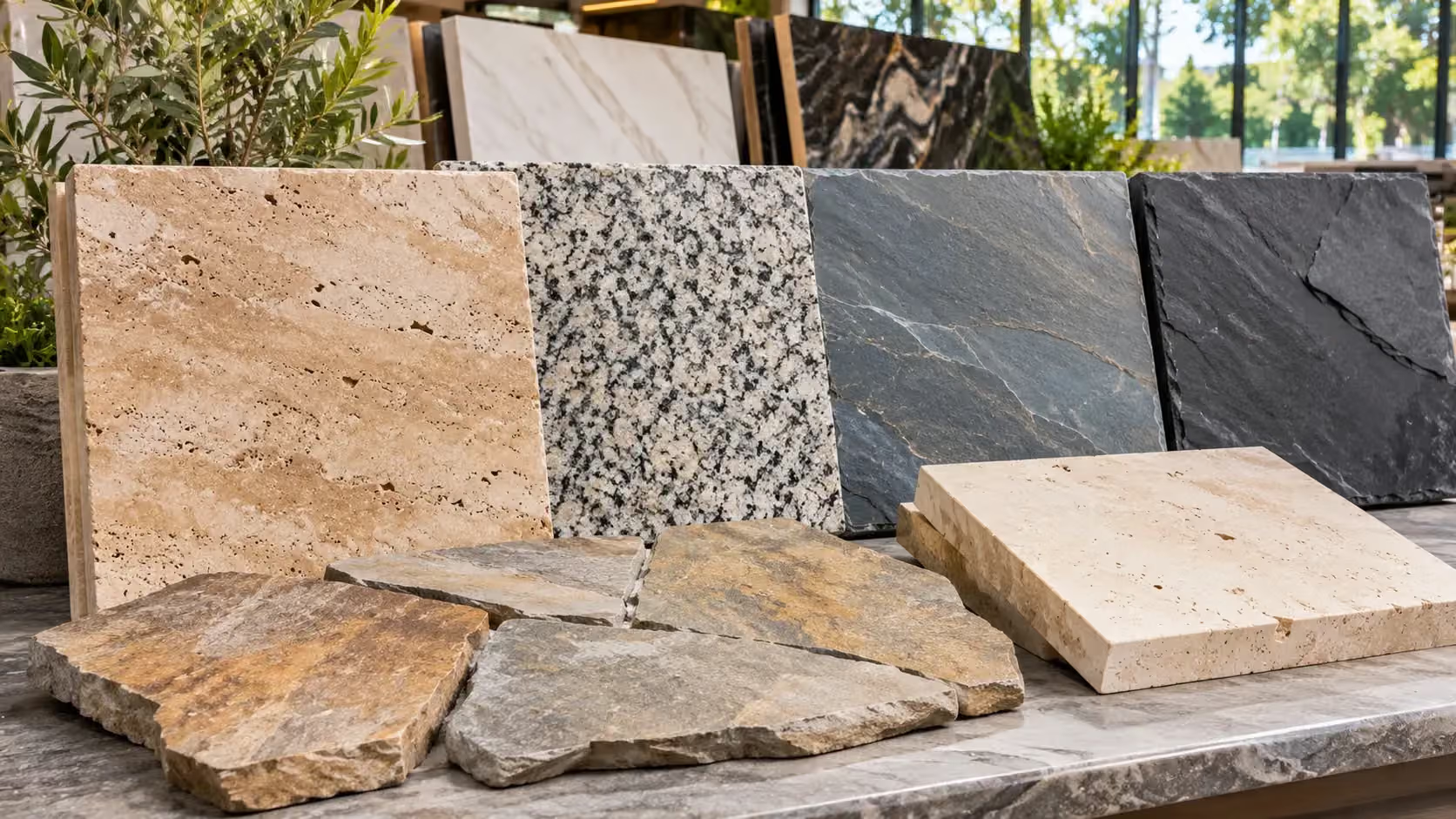
Natural stone samples including beige travertine, gray granite, blue-gray bluestone, flagstone, limestone, and dark slate displayed in a showroom.
How to Use Natural Stone in Different Outdoor Spaces
Natural stone can connect different parts of an outdoor living area. The best results come from selecting materials that suit each space while maintaining a consistent design.
Natural Stone Patios and Terraces
A natural stone patio can create a comfortable foundation for outdoor seating and dining. Travertine, flagstone, and selected limestone or granite products can work depending on the design and site conditions.
Consider the size and layout of the patio before selecting stone. Larger pieces can create a clean, spacious appearance, while irregular flagstone can produce a more organic design.
Choose a finish that provides suitable traction and plan the installation around proper drainage. Water should move away from the home rather than collecting beneath or across the patio.
Pool Decks and Surrounds
Pool areas require careful material selection because surfaces regularly become wet. Travertine and certain textured natural stones may be suitable, but appearance alone should never determine the choice.
Evaluate slip resistance, water absorption, surface temperature, and resistance to pool chemicals. Also consider the stone's color and finish, since darker materials may absorb more solar heat than lighter alternatives.
The surrounding installation matters just as much as the stone itself. Proper drainage helps prevent standing water and reduces problems caused by repeated moisture exposure.
Outdoor Kitchens and Dining Areas
Natural stone can add a refined appearance to outdoor kitchen countertops, serving areas, and dining spaces. Granite is a common consideration for exterior countertops because of its hardness and durability.
Choose a surface that can handle the expected use. Food preparation areas need materials that are easy to clean and maintain. Also consider how direct sunlight and weather exposure may affect the stone.
Coordinate countertop colors with patio flooring, cabinetry, and other outdoor finishes. This creates a more cohesive space without requiring every surface to use the same material.
Fire Pits and Outdoor Fireplaces
Stone can complement fire pits and outdoor fireplaces through surrounding paving, seating areas, and decorative features. However, not every natural stone is suitable for direct or repeated heat exposure.
Use materials specifically evaluated for the temperatures and installation conditions involved. Some stones may crack, discolor, or deteriorate under thermal stress.
Follow the fire feature manufacturer's requirements and consult an experienced installer before selecting stone for areas exposed to direct flames or intense heat.
Garden Paths, Steps, and Retaining Walls
Natural stone can create pathways that connect patios, lawns, planting beds, and other outdoor areas. Flagstone and bluestone are useful options to consider for paths, while suitable stone products can also be used for steps and retaining walls.
For walkways, prioritize stable footing and consistent surface levels. Steps should have safe, predictable dimensions, while retaining walls need appropriate structural support and drainage.
Natural stone landscaping works best when its colors and textures complement nearby plants, paving, and architectural details.
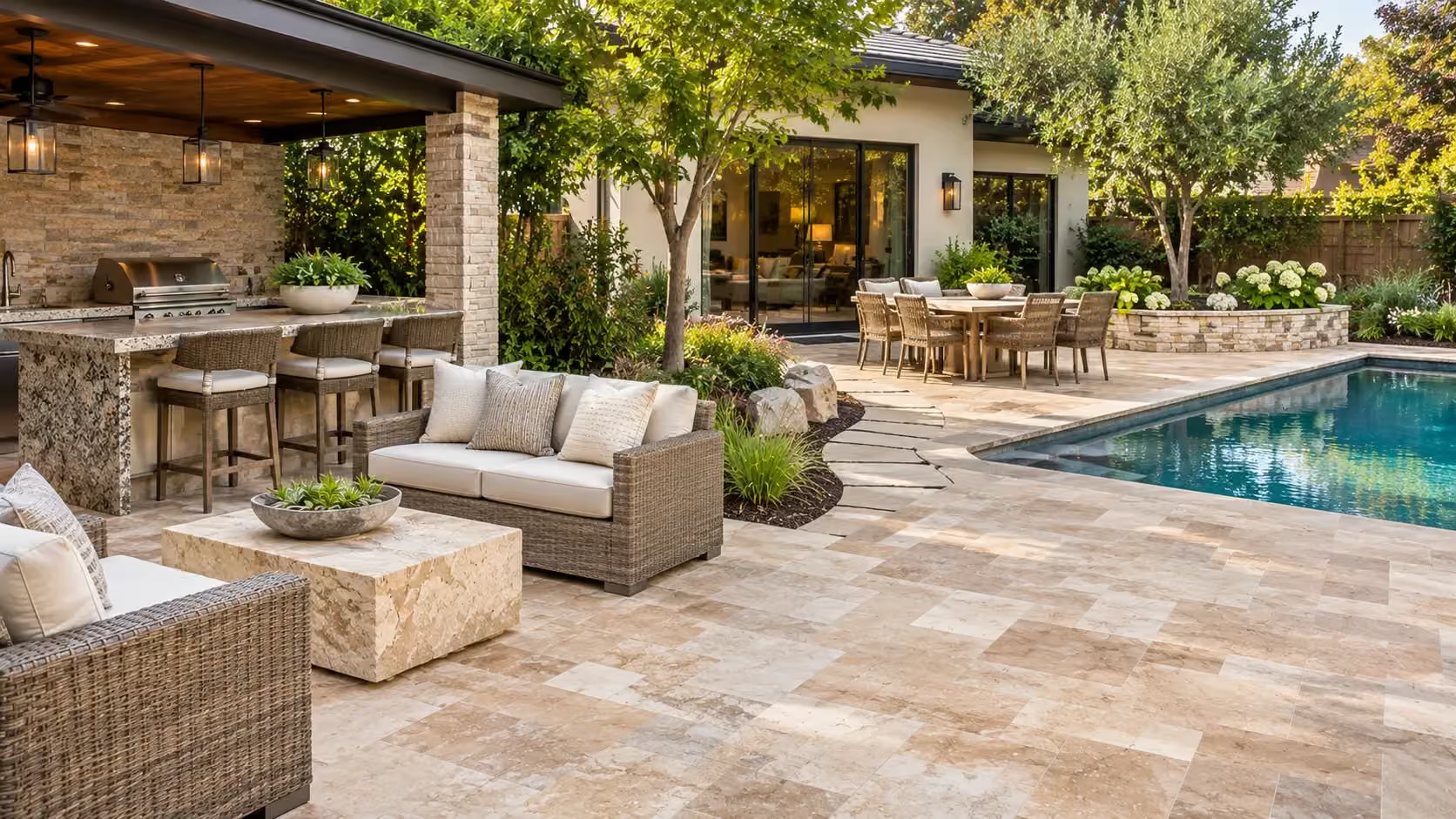
Bay Area backyard featuring a travertine patio, natural stone pool deck, granite outdoor kitchen countertop, and landscaped outdoor living areas.
Choosing the Right Stone Finish for Outdoor Applications
The right finish affects both appearance and safety. Outdoor surfaces should provide enough texture and grip, especially around pools, patios, and walkways.
Honed finish: Offers a smooth, matte appearance with less shine.
Brushed finish: Adds subtle texture for outdoor applications.
Flamed finish: Creates a rougher surface, often used for added traction.
Tumbled finish: Provides a softer, weathered appearance.
Always consider the stone type, location, and expected foot traffic before choosing a finish. Ask for samples and evaluate the actual surface, especially for areas exposed to rain or pool water.
What to Consider Before Installing Outdoor Natural Stone
Choosing a beautiful stone is only one part of a successful outdoor project. The site conditions, installation system, and intended use also matter.
Start by evaluating these important factors:
Weather exposure: Consider direct sunlight, rain, coastal moisture, and temperature changes. Some stones require more protection than others.
Drainage: Plan slopes and drainage routes to prevent standing water. Poor drainage can contribute to staining, moisture problems, and installation damage.
Heat retention: Darker stone may become hotter in direct sunlight. Consider lighter colors and appropriate finishes for areas where people walk barefoot.
Slip resistance: Pool surrounds, steps, and exposed walkways need surfaces with suitable traction for their conditions.
Stone thickness: The correct thickness depends on the application, base, expected loads, and installation method.
Sealing requirements: Some stones need a suitable sealer to help reduce staining and moisture absorption. Others may require less frequent treatment.
Professional planning is especially important for outdoor kitchens, pool decks, steps, and retaining walls. The base preparation, setting materials, joint spacing, and drainage system all influence the finished result.
How to Maintain Natural Stone Outdoors
Regular maintenance helps preserve natural stone and prevent surface damage. Sweep away dirt and leaves, and clean surfaces with a stone-safe cleaner and water.
Avoid acidic cleaners, especially on limestone and marble, as they can damage the surface. Check whether your stone needs sealing, since requirements vary by material and finish. Also, remove moss and algae promptly to help maintain a clean, safer surface.
For detailed care advice, consult Bay Stone Depot's natural stone care and maintenance guidance. Following material-specific recommendations is more effective than applying the same cleaning routine to every stone.
Conclusion
Natural stone can make patios, pool decks, outdoor kitchens, and garden paths more attractive and functional. The right choice depends on the material's properties, surface finish, weather exposure, and intended use.
Travertine, granite, limestone, slate, bluestone, and flagstone each offer different design possibilities. Compare their practical requirements before making a decision, and give equal attention to installation, drainage, and ongoing care.
Bay Area homeowners planning an outdoor renovation can review Bay Stone Depot to explore natural stone options and consider how each material will work within their space.
Tags:outdoorpatiopool deckbay areanatural stone
FAQ
FAQs
What is the best natural stone for an outdoor patio?
Is natural stone suitable for Bay Area pool decks?
Does outdoor natural stone need to be sealed?
Which natural stone stays coolest in direct sunlight?